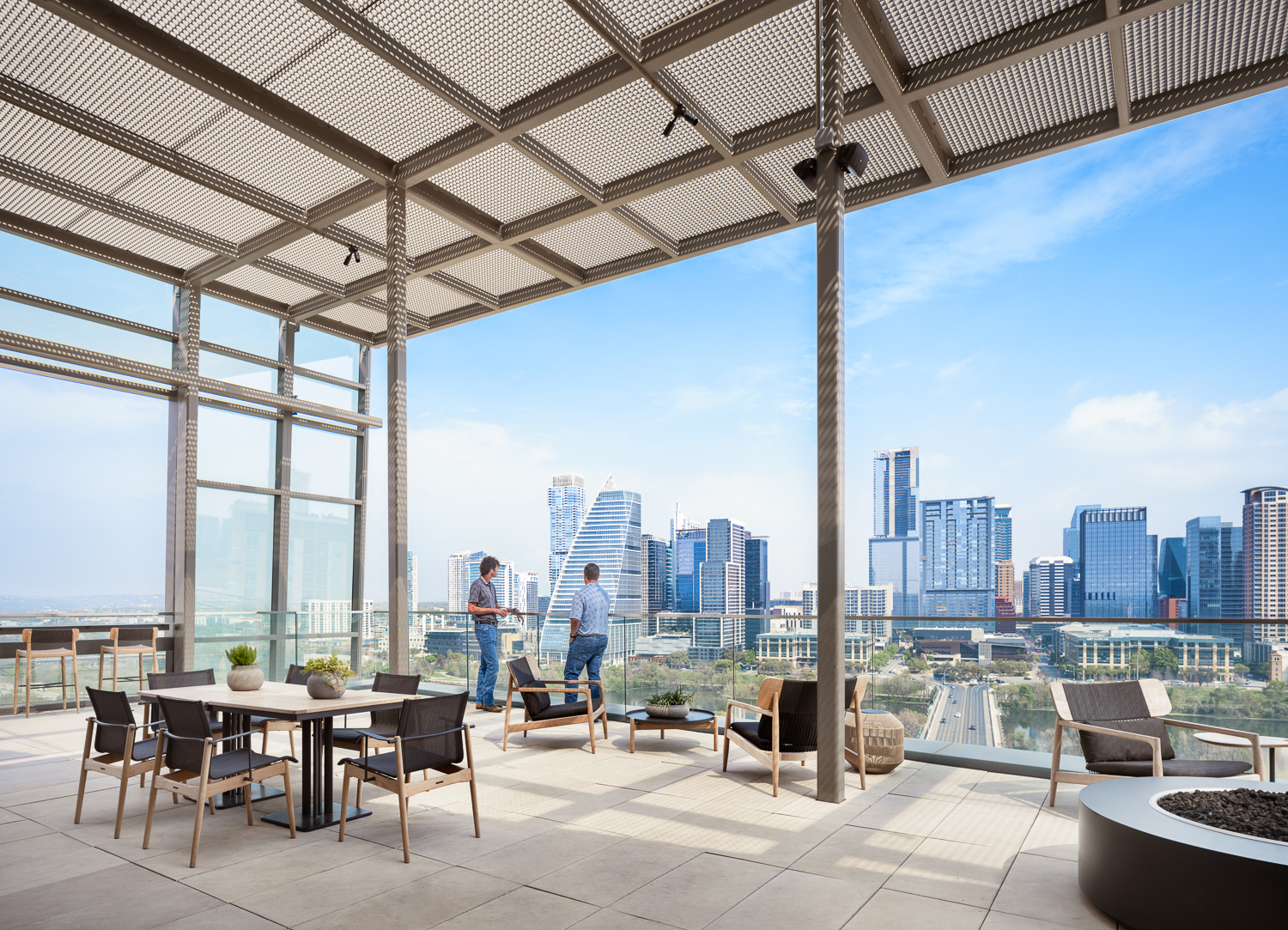
Recent industry coverage – JLL | CBRE | PwC – has detailed how Class A buildings are reimagining the workplace to attract and retain tenants in a competitive market. Owners are investing in thoughtfully designed fitness centers, hospitality-inspired lounges, wellness spaces, rooftop venues, and curated programming environments.
The message is clear: amenities are no longer secondary considerations. They are strategic differentiators and essential to attracting premium lease terms.
But here’s the deeper shift the headlines don’t fully unpack:
The competitive advantage isn’t in what gets built. It’s how it gets delivered every day.
An integrated tenant experience strategy.
The Evolution of Commercial Real Estate Amenities
For years, amenities were evaluated by square footage and design quality. Today, they are evaluated by:
- Utilization
- Retention impact
- Tenant engagement
- Brand synergy
Amenities are no longer isolated features within a building. They function as extensions of a landlord’s vision and long-term asset strategy.
This marks the evolution from amenity investment to experience strategy.
But design is only the beginning.
Why An Integrated Tenant Experience Strategy Requires Operational Depth
In hospitality, experience is not defined by architecture alone. It is defined by consistency, creativity & connection.
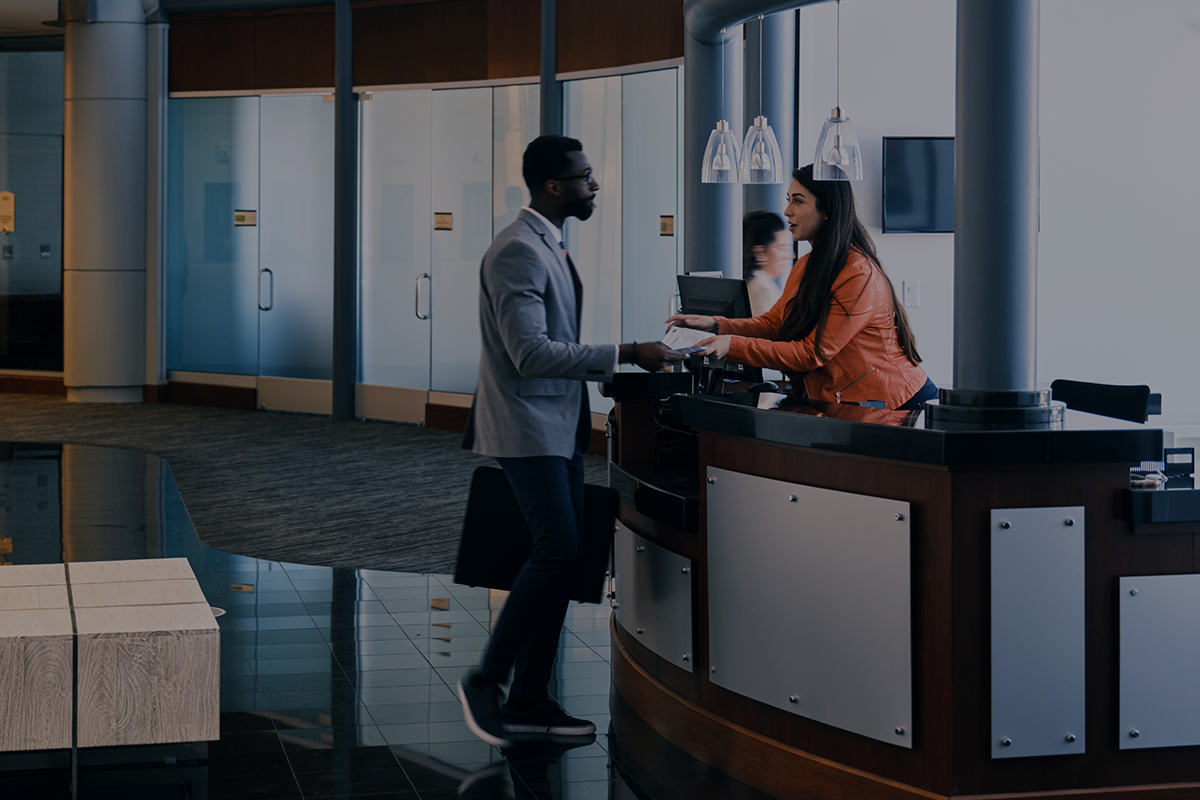
Because when tenants walk into your space on a random Tuesday at 7:30am, they don’t experience:
- Capital expenditure
- Architectural renderings
- Marketing campaigns
They experience:
- An inclusive, welcoming environment
- Programming quality
- Staff engagement
- Energy and activation
- Reliability over time
In commercial real estate, this translates directly to tenant experience strategy.
The most successful hospitality ecosystems understand that exceptional amenities require:
- True hospitality professionals
- Innovative programming
- Hyper-attentive operational oversight
- 360° performance visibility
- Thoughtful, consistent leadership
From Launch Moment to Sustained Performance
Many amenity environments open with momentum. Fewer sustain it.
Buildings that strengthen tenant retention over time share common characteristics:
- Intentionally designed amenities
- Programming that evolves with its users
- Service standards remain consistent
- Data informs refinement conversations and solutions
This requires an integrated hospitality approach: consulting insight, operational execution, and defined performance management function as a cohesive system rather than separate phases.
When strategy and execution are aligned from the outset, amenities move from visual differentiators to strategic assets.
The Competitive Advantage of Integrated Tenant Experience Strategy
As commercial real estate becomes increasingly experience-driven, integrated amenity management becomes essential.
Owners who treat amenities as operational ecosystems — not installations — are better positioned to:
- Enhance brand integrity
- Deepen tenant relationships
- Drive meaningful engagement
- Ensure long-term asset performance
The future of commercial real estate amenities will not be defined by who builds the most. It will be defined by who sustains meaning in the workplace.
This is the shift from amenity investment to experience strategy, and it is reshaping how premier organizations approach tenant engagement, hospitality-focused experience, and long-term value creation.
The Model That Scales
Those winning in this new era are aligning:
- Owner vision and strategy
- Design
- Hospitality
- Talent
- Analytics
Under one cohesive ecosystem. Because in today’s environment, tenant retention isn’t about what’s added. It’s about what’s sustained.