As wellness continues its reign in popular culture and society, today’s spa guests want more than just relaxation. They’re looking for personalized experiences that support both mental and physical health. Beyond full-body relaxation, many look to spa services as a way to manage stress, work through emotions, and find respite from the pressures of everyday life.
According to the 2025 ISPA Consumer Snapshot Report, a striking 85 percent of spa-goers consider visiting a spa to be an act of self-care, and nearly two-thirds cited reducing stress as a primary motivation for visiting a spa. The report argues that spas “that tailor their services to align with top customer priorities can position themselves as essential contributors to holistic health, meeting the evolving needs of spa-goers in their pursuit of mental and physical wellbeing.”
Mental health is a vital part of the wellness journey, and by intentionally integrating mental health offerings into services, spas can create deeper, more meaningful experiences that resonate with guests and elevate the overall value of menu offerings.
Positioning Your Spa As A Mental Wellbeing Destination
Create A Relaxing Atmosphere
First impressions are everything, and spa design is all about creating an immersive, multi-sensory experience that transports clients from the moment they step through the door. Soft lighting, soothing colors, gentle soundscapes, and aromatherapy with stress-relieving scents like lavender or eucalyptus help trigger the parasympathetic nervous system—the part of the nervous system responsible for rest and relaxation—allowing clients to detach from stress before their treatment even begins. Through our spa design and consulting division, Arch Amenities Group helps wellness destinations intentionally shape these experiences by aligning layout, flow, and sensory elements alongside the guest journey.
Incorporate Meditation
Offering guided meditation or breathing exercises before or after treatments can ease guests into a state of calm. Some Arch-managed spas are using technologies like the Somadome, a meditation pod with sound, light, and sensory features to offer more wellness options and meet the growing interest in mindful, tech-enhanced experiences.
Designate Quiet Reflection Spaces
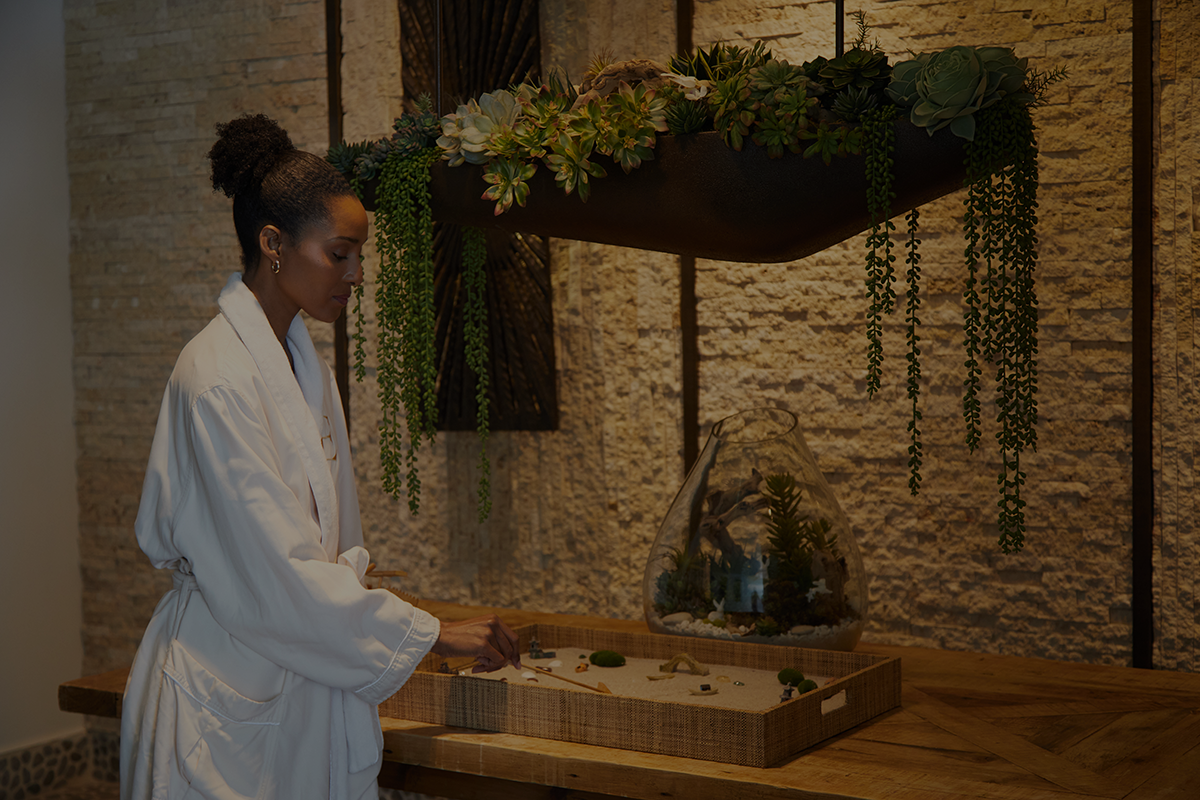
Designated lounges or outdoor areas where guests can pause, journal, or simply sit in quiet help to reinforce a sense of mental wellbeing. Even short periods of uninterrupted stillness after a service help guests process their experiences and extend the benefits of their treatments.
Offer Personalized Services
Tailoring treatments to each guest’s emotional and mental needs increases both satisfaction and loyalty. Beyond traditional massages and facials, spas can introduce treatments designed specifically to calm the nervous system and support emotional balance. For example, sound therapy sessions using singing bowls or binaural beats create immersive auditory experiences that promote relaxation and mental clarity. Having a trauma-informed massage therapist on your staff adds an extra layer of care, ensuring treatments are delivered with sensitivity to emotional boundaries and nervous system responses. By creating clear treatment categories focused on stress relief, emotional rejuvenation, or mental clarity, spas make it easier for guests to find experiences that align with their mental wellness goals, ultimately transforming the spa visit into a truly restorative journey.
Beyond the Spa: Wellness Retreats
Wellness retreats offer a powerful and immersive way to support mental health by removing guests from their everyday stressors and placing them in environments specifically designated and designed for healing and restoration. Unlike shorter spa visits, retreats provide extended time and space for deep mental and emotional renewal.
Retreats encourage guests to disconnect from daily pressures like workplace demands, digital overload, and constant decision-making. This intentional break allows the nervous system to shift out of fight-or-flight mode and enter a state of rest and recovery. The serene setting of a wellness retreat helps to promote a sense of peace and calm that can be difficult to find in day-to-day routines. Beyond the physical setting, wellness retreats also address something many people are deeply missing: genuine human connection. In an increasingly digital, fast-paced society, feelings of isolation and disconnection are common, even among those who appear constantly “connected.” Retreats create intentional spaces for shared experiences, meaningful conversation, and collective healing, reminding guests they are not alone in their challenges. This sense of community fosters belonging, emotional safety, and support—often becoming just as restorative as the treatments themselves.
Beyond the physical setting, wellness retreats also address something many people are deeply missing: genuine human connection. In an increasingly digital, fast-paced society, feelings of isolation and disconnection are common, even among those who appear constantly “connected.” Retreats create intentional spaces for shared experiences, meaningful conversation, and collective healing, reminding guests they are not alone in their challenges. This sense of community fosters belonging, emotional safety, and support—often becoming just as restorative as the treatments themselves.
Different Types of Wellness Retreats
- 1. Mindfulness and Meditation Retreats
- Focused primarily on cultivating present-moment awareness and inner stillness, these retreats guide participants through meditation practices, breathwork, and movement like yoga or tai chi. The goal is to reduce anxiety, increase emotional regulation, and enhance mental clarity.
- Focused primarily on cultivating present-moment awareness and inner stillness, these retreats guide participants through meditation practices, breathwork, and movement like yoga or tai chi. The goal is to reduce anxiety, increase emotional regulation, and enhance mental clarity.
- 2. Nature and Eco-Retreats
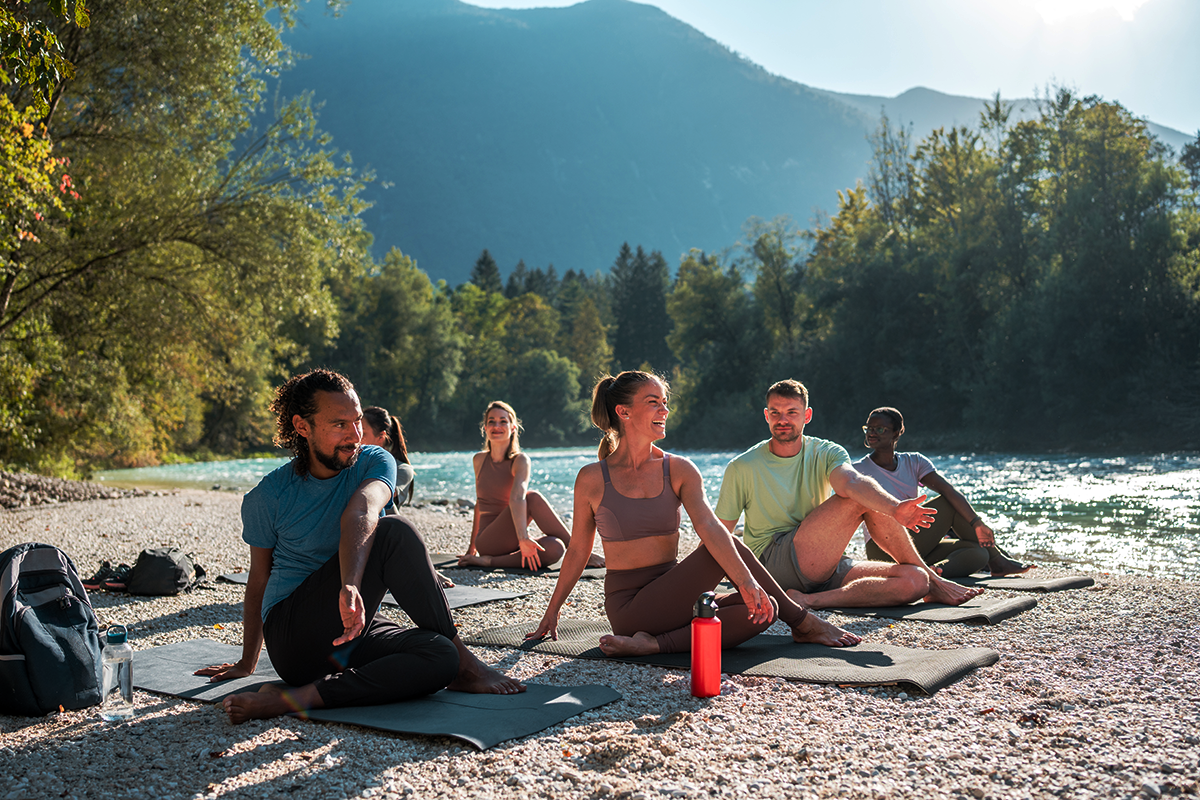
- Like the name implies, these sustainable getaways emphasize the healing power of nature. Activities may include guided nature walks, hiking, or outdoor yoga, combined with periods of silence and reflection. The immersion in nature helps lower cortisol levels, boost mood, and foster a deep reconnection with oneself and the environment, all while operating with a low ecological footprint.
- Like the name implies, these sustainable getaways emphasize the healing power of nature. Activities may include guided nature walks, hiking, or outdoor yoga, combined with periods of silence and reflection. The immersion in nature helps lower cortisol levels, boost mood, and foster a deep reconnection with oneself and the environment, all while operating with a low ecological footprint.
- 3. Detox Retreats
- A detox retreat focuses on ridding the body of toxins through specialized diets, fasting, or cleansing therapies, while also encouraging a break from digital devices and screens. The digital detox component is particularly impactful for mental health, reducing information overload, improving sleep, and encouraging face-to-face connection.
- A detox retreat focuses on ridding the body of toxins through specialized diets, fasting, or cleansing therapies, while also encouraging a break from digital devices and screens. The digital detox component is particularly impactful for mental health, reducing information overload, improving sleep, and encouraging face-to-face connection.
- 4. Holistic Healing Retreats
- Incorporating a variety of complementary therapies such as acupuncture, energy healing, reiki, sound baths, and aromatherapy, these retreats aim to balance the mind, body and spirit. This type of retreat often includes educational workshops on nutrition, stress management, and emotional resilience, empowering guests with tools for long-term mental health maintenance.
- Incorporating a variety of complementary therapies such as acupuncture, energy healing, reiki, sound baths, and aromatherapy, these retreats aim to balance the mind, body and spirit. This type of retreat often includes educational workshops on nutrition, stress management, and emotional resilience, empowering guests with tools for long-term mental health maintenance.
- 5. Movement Retreats
- Centered around physical movement like yoga, Pilates, dance, or martial arts, these retreats aim to help participants reconnect with their bodies and emotions. The physical activity, whether structured or freeform, helps release stored tension, elevate mood, and cultivate body awareness.
The Future of Mental Health in Wellness Services
By integrating both spa services and wellness retreats into a comprehensive wellness strategy, spas can position themselves as essential partners in supporting mental well-being. Spa environments and treatments play a direct role in mental health by helping regulate the nervous system, reduce stress and anxiety, and create space for emotional decompression and mental clarity. While retreats offer extended, immersive experiences that encourage reflection and long-term behavioral change, spa services provide accessible, ongoing support for mental well-being through regular touchpoints. Together, they create a continuum of care that supports immediate mental relief as well as deeper, sustained emotional resilience.